
Why social connection matters for older adults
Assisted living can help reduce senior isolation by creating regular opportunities for conversation, shared activities, meals, and dependable daily contact. These routines can be especially valuable for older adults who live alone, have limited mobility, or no longer drive.
Social isolation means having few regular contacts or opportunities to interact with others. Loneliness is different: it describes the emotional experience of feeling disconnected, even when other people are nearby. A person may live independently and feel lonely, while another person may enjoy plenty of alone time without feeling isolated.
Long periods of isolation are associated with higher risks of depression, anxiety, cognitive decline, poor appetite, inactivity, and difficulty managing health conditions. Social connection does not prevent every health problem, but regular contact gives older adults more emotional support and more chances for concerns to be noticed early.
How does assisted living create daily opportunities to connect?
Assisted living typically provides a shared residential setting where residents can encounter other people throughout the day. This differs from living alone in a private home, where several days may pass with little face-to-face contact.
Common opportunities for connection include:
- Eating meals with other residents
- Joining group activities or informal gatherings
- Talking with staff during daily routines
- Sitting in shared lounges, libraries, or outdoor areas
- Participating in exercise, games, music, crafts, or discussion groups
- Greeting neighbors in hallways and common areas
These interactions do not have to be lengthy or highly organized. A short conversation over breakfast, a familiar greeting from a staff member, or sitting near others during an activity can help create a sense of belonging.
For some residents, repeated casual contact is more comfortable than attending a large event. Assisted living can offer both types of interaction, allowing a person to choose between quiet companionship and more active participation.
Can assisted living help someone who is shy or reluctant to join activities?
Yes, but social connection usually develops gradually. A resident who is reserved, grieving, hard of hearing, or adjusting to a new setting may not feel comfortable joining a group immediately.
Staff and family members can support the transition by identifying activities that match the person’s interests and energy level. Someone who does not enjoy games may prefer gardening, current-events discussions, reading, cooking, music, or watching a favorite sport with others. A resident who avoids large groups may begin with one-on-one conversation or a smaller gathering.
Helpful approaches may include:
- Introducing a new resident to one or two people with similar interests
- Choosing activities with a clear purpose rather than unstructured socializing
- Sitting nearby during the first few gatherings
- Allowing the resident to attend briefly and leave when ready
- Looking for quieter times of day when common areas are less busy
- Addressing hearing, vision, pain, or fatigue that may make participation difficult
Participation should be encouraged without treating it as an obligation. Social connection is more meaningful when the older adult has some choice and control.
What role do shared meals play?
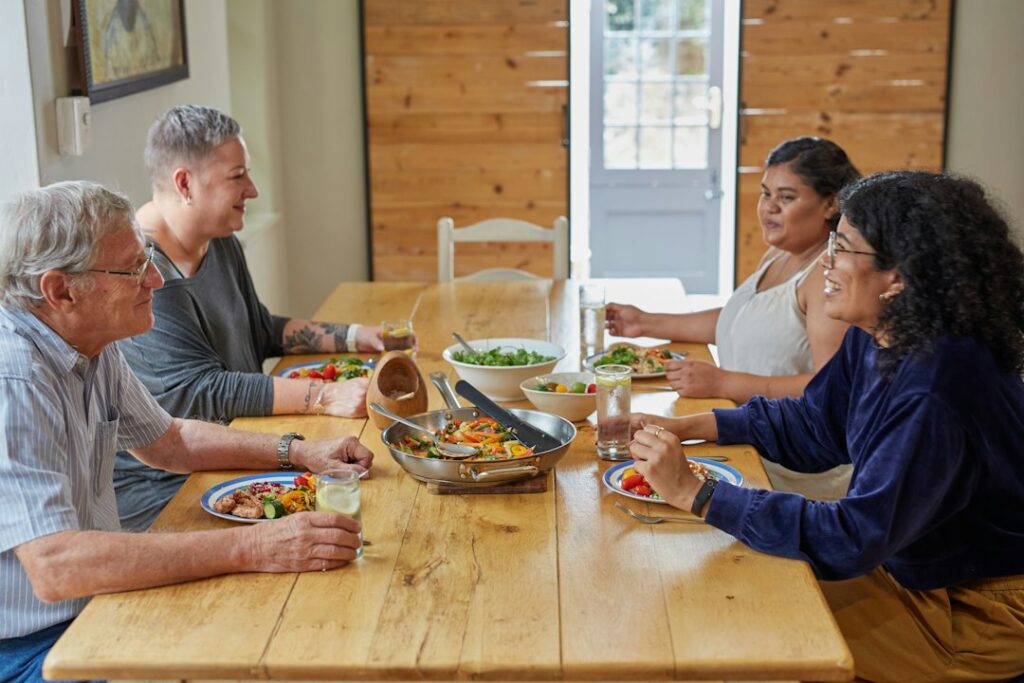
Shared meals provide one of the most consistent opportunities for social contact. Unlike occasional events, meals occur on a regular schedule and can help establish a daily rhythm.
Eating with others may also support nutrition. Older adults who live alone sometimes lose interest in preparing food or may skip meals because cooking feels difficult. A pleasant dining routine can make eating more enjoyable and give residents a reason to leave their rooms.
Mealtimes can also reveal changes that might otherwise go unnoticed. A resident who suddenly stops attending meals, eats much less, or becomes unusually quiet may be experiencing illness, depression, dental problems, medication effects, or difficulty adjusting. Staff awareness does not replace medical evaluation, but regular contact can help identify concerns earlier.
How can assisted living help during Kane winters?
Seasonal weather can affect social contact in Kane. Cold temperatures, snow, ice, and shorter daylight hours may make walking, driving, or visiting more difficult, particularly for older adults with balance problems or limited mobility.
During poor weather, a resident living alone may remain indoors for extended periods. Shared indoor spaces and scheduled activities can provide alternatives to leaving the property. Even simple routines—such as a warm meal in a common dining area, an indoor exercise session, or a visit with other residents—can reduce the sense of being confined at home.
Weather-related isolation can also affect family visits. Relatives may be less likely to travel during hazardous conditions, and older adults may cancel errands or social plans. A setting with regular staff contact and nearby peers can help maintain social interaction when outside travel is limited.
Does assisted living replace family and community relationships?
No. Assisted living can add daily connection, but it does not replace family, friends, neighbors, faith communities, former coworkers, or other important relationships.
A resident may still benefit from:
- Regular phone or video calls
- Family meals and visits
- Letters, cards, photographs, and familiar belongings
- Visits from friends or relatives
- Participation in local traditions and community events when practical
- Continued contact with longtime neighbors

Family members should avoid assuming that a move automatically solves loneliness. A person may be surrounded by people and still miss familiar relationships, a former home, a spouse, or a sense of independence. Ongoing contact helps preserve identity and emotional continuity.
What if an older adult still feels lonely in assisted living?
Assisted living reduces some barriers to social contact, but it cannot guarantee that every resident will feel connected. Loneliness may continue because of grief, depression, memory loss, hearing impairment, chronic pain, personality changes, or difficulty forming new relationships.
Warning signs can include:
- Staying in the room most of the day
- Repeatedly declining meals or activities
- Sleeping much more or less than usual
- Losing interest in personal care or favorite hobbies
- Expressing hopelessness or saying that nobody cares
- Becoming unusually irritable, fearful, or withdrawn
These changes deserve attention. Staff may be able to adjust routines, improve introductions, address communication barriers, or suggest activities better suited to the resident. Sudden changes in mood, behavior, appetite, or memory should also be discussed with a healthcare professional because loneliness may occur alongside depression, illness, medication problems, or cognitive changes.
If an older adult talks about self-harm, feeling unsafe, or not wanting to live, immediate assistance is needed through emergency services or a crisis resource.
What should families ask when comparing assisted living options?
The most useful questions focus on everyday opportunities for meaningful connection, not simply the number of activities listed on a calendar.
Ask:
- How are new residents introduced to others?
- Are activities offered in small as well as large groups?
- What happens if a resident does not attend meals or activities?
- Are common areas comfortable and accessible?
- How are hearing, vision, mobility, and memory needs supported?
- Can residents maintain private time while still receiving regular check-ins?
- Are family visits and phone communication easy to manage?
- How does the setting support residents during winter weather or other travel disruptions?
The goal is not constant social activity. Healthy support includes a balance of companionship, privacy, familiar routines, and opportunities to participate. For many older adults, assisted living is most helpful when it makes connection available without taking away personal choice.
