
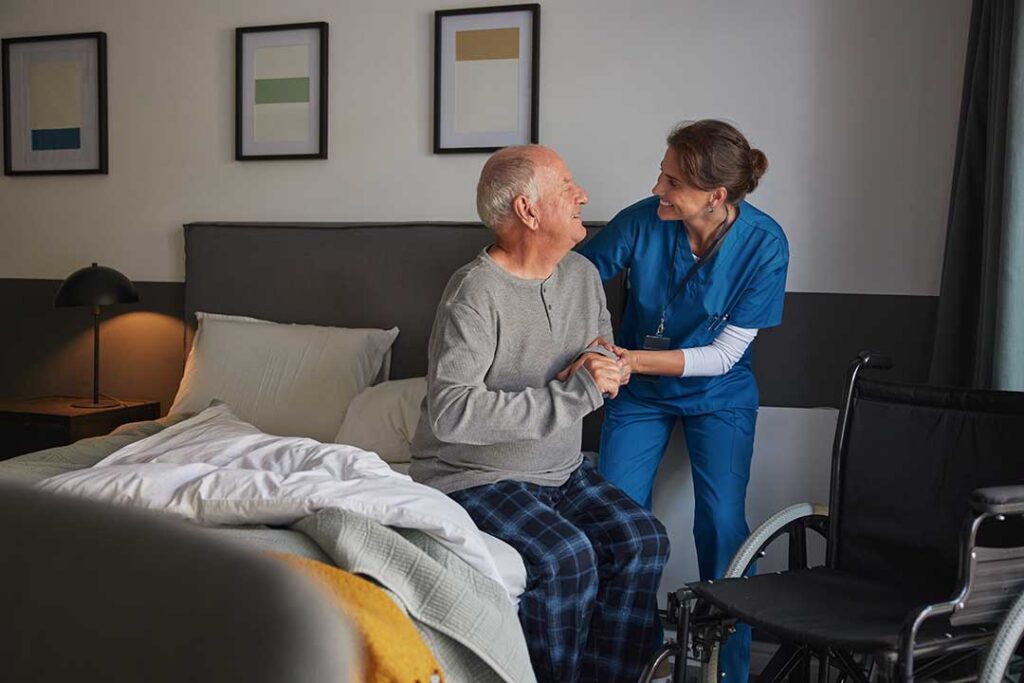
What are integrative therapies in assisted living?
Integrative therapies combine standard medical care with supportive practices that may improve comfort, mobility, mood, sleep, or social connection. They are used alongside, not instead of, prescribed treatment.
In an assisted living community, these approaches may include guided relaxation, music, gentle movement, massage, art activities, reminiscence programs, aromatherapy, spiritual support, breathing exercises, or access to qualified complementary health practitioners. The exact offerings vary by residence, resident needs, staffing, and safety policies.
The word “integrative” matters. A therapy should fit into the resident’s overall care plan and be communicated to the people responsible for medications, mobility, nutrition, and medical care. The National Center for Complementary and Integrative Health describes complementary approaches as those used together with conventional care, while “alternative” means using them in place of conventional treatment. Replacing prescribed care with an unproven therapy can create serious risks. ([nccih.nih.gov](https://www.nccih.nih.gov/health/are-you-considering-a-complementary-health-approach?utm_source=openai))
Which therapies may be appropriate for older adults?
The most suitable options are usually low-risk, adaptable, and connected to a specific goal. A resident may use one activity for relaxation and another to support movement or social engagement.
Common examples include:
- Music-based activities: Listening to familiar music, singing, rhythm exercises, or individualized playlists may encourage participation and bring back meaningful memories.
- Gentle movement: Seated stretching, balance exercises, tai chi, or carefully adapted yoga may support flexibility and body awareness. Any movement program should account for fall risk, joint limitations, dizziness, and assistive devices.
- Mindfulness and breathing: Short breathing exercises, guided imagery, and quiet meditation may help some residents manage stress or prepare for sleep.
- Creative activities: Painting, crafts, gardening in raised containers, writing, and other forms of creative expression can support identity and social connection without requiring athletic ability.
- Massage or touch-based comfort: Light massage may be soothing for some people, but it may not be appropriate over fragile skin, wounds, areas of swelling, or certain medical conditions.
- Aromatherapy: Scents may be pleasant for one person and irritating for another. Fragrance sensitivity, asthma, allergies, headaches, and dementia-related responses should be considered.
- Spiritual or culturally meaningful practices: Prayer, readings, quiet reflection, and visits from a resident’s chosen spiritual support can be part of whole-person care when the resident wants them.
NCCIH notes that practices such as meditation, yoga, tai chi, and qigong are widely used by older adults, with research suggesting possible benefits for relaxation and some symptoms, including pain. Evidence differs by therapy and condition, so a promising activity should not be treated as a guaranteed medical treatment. ([nccih.nih.gov](https://www.nccih.nih.gov/health/providers/digest/psychological-and-physical-practices-for-older-adults?utm_source=openai))
Can these therapies treat pain, depression, or dementia?
They may support symptom management, but they do not cure major medical or neurological conditions. A resident with ongoing pain, new confusion, sadness, withdrawal, or sleep changes still needs appropriate medical assessment.
For example, music, relaxation, or gentle movement may make discomfort easier to manage. They may also help a resident participate in daily routines. However, they should not delay evaluation for a possible infection, medication side effect, injury, depression, or worsening illness.
Depression deserves particular care. The National Institute on Aging advises that complementary approaches may be helpful alongside treatment, but there is limited evidence that they can successfully treat depression by themselves. ([nia.nih.gov](https://www.nia.nih.gov/health/depression-and-older-adults?utm_source=openai))
For residents living with dementia, familiar music, consistent routines, sensory activities, and reminiscence may be calming. Responses are individual. A therapy that comforts one resident may confuse, overstimulate, or frustrate another.
What safety questions should residents and families ask?
Before starting a new therapy, ask what the activity is intended to do, who will provide it, how staff will adapt it, and how concerns will be documented. Useful questions include:
- Is the activity included in the resident’s assessment or support plan?
- Does it affect balance, alertness, blood pressure, skin, eating, or sleep?
- Are there contraindications related to surgery, diabetes, heart disease, osteoporosis, seizures, allergies, or dementia?
- Will the resident be able to stop at any time?
- What training or credentials does the outside practitioner have, if one is involved?
- How will the activity be coordinated with medications and medical appointments?
- What will staff do if the resident experiences pain, dizziness, shortness of breath, agitation, or a skin reaction?

Pennsylvania requires assisted living residences to maintain assessment and support-plan processes, and the state publishes forms and compliance materials for these settings. That makes care-plan communication especially relevant when a therapy affects daily routines, mobility, medication administration, or health monitoring. ([pa.gov](https://www.pa.gov/agencies/dhs/resources/licensing/pch-alr-licensing/pch-alr-compliance-guides?utm_source=openai))
Are supplements and herbal products safe in assisted living?
Not necessarily. “Natural” does not mean risk-free. Supplements may interact with prescriptions, over-the-counter medicines, or other supplements. They can also cause side effects, vary in quality, or affect bleeding, blood pressure, blood sugar, alertness, or digestion.
Residents should provide a complete list of vitamins, herbal products, teas used as remedies, and nonprescription medicines to the appropriate health care professionals and the assisted living staff responsible for medication coordination. NCCIH specifically recommends discussing possible interactions and not using an unproven product to postpone needed medical care. ([nccih.nih.gov](https://www.nccih.nih.gov/health/are-you-considering-a-complementary-health-approach?utm_source=openai))
In a community setting, residents and families should also ask how a product would be stored, labeled, approved, and documented. A supplement brought from home should not simply be added to a medication routine without review.
How can seasonal conditions in Kane affect participation?
Cold, icy weather and shorter winter daylight can make outdoor activity difficult for local residents. Indoor options such as chair exercises, music, hallway walking with appropriate support, crafts, and guided relaxation can help maintain routine during periods when sidewalks or roads are unsafe.
Seasonal changes may also affect mood, sleep, hydration, and social contact. A resident who is less active during winter may benefit from a predictable indoor schedule, while someone who enjoys gardening may prefer indoor plants or seed-starting activities. During warmer weather, outdoor sessions should include shade, water, rest periods, and protection from heat.
The goal is not to offer the most unusual therapy. It is to find an activity that is safe, meaningful, and realistic for the resident’s abilities and preferences.
How should residents judge whether a therapy is helping?
A useful therapy has a clear purpose and can be observed over time. Staff and families might track whether the resident appears calmer before bedtime, joins meals more consistently, reports less discomfort, participates longer in movement, or has fewer episodes of distress.
Improvement should not be assumed simply because an activity is enjoyable. Likewise, lack of interest is useful information. A resident’s preferences, culture, past experiences, and right to decline should guide participation.
Integrative care works best when it remains practical: conventional treatment continues, risks are reviewed, the resident’s voice is respected, and supportive activities are adjusted when health or abilities change.
